English


| Color: | |
|---|---|
| Quantity: | |


| Brand Name | DEMAX |
| Product Name | PVC Heat Transfer Marble Sheet |
| Material Composition | 35% polyvinyl chloride+62% Caco3+3% additive |
| Size | 1220*2440*4mm customizable |
| Color | White, Grey, Black, Wooden, Support Customization |
| Maintenance | Low Maintenance - Easy to Clean |
| Installation Method | Pasted on the wall |
| Application scenario | Residential Facades, Commercial Exteriors, Interior decoration, Public Spaces |
| Feature | Eco-Friendly, Moisture-Proof, Anti-Static, Sound-Absorbing, Mould-Proof, Waterproof, Fireproof, |
| Warranty | 5–10 Years |
| Certifications | SGS,CE,UL,ISO |
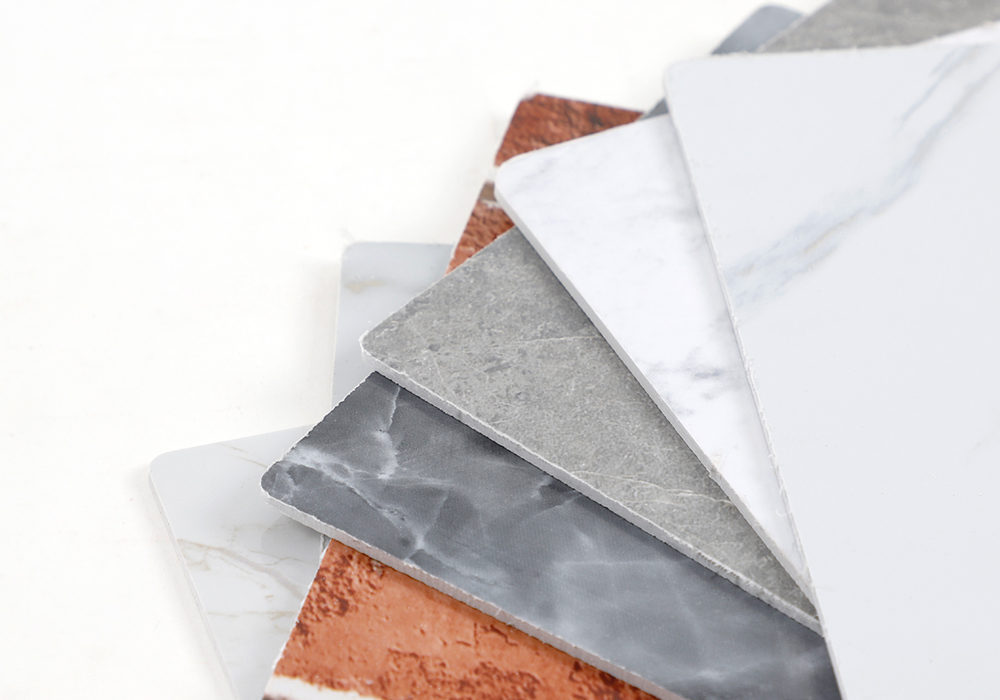
The PVC marble heat transfer sheet provides a marble-pattern decorative surface for interior wall and furniture applications. Constructed from a composite of polyvinyl chloride, calcium carbonate, and processing additives, the product functions as an alternative to natural marble slabs. Standard panel dimensions are 1220×2440×4mm, with custom sizes available upon request. The surface receives a heat-transferred marble-vein pattern followed by a UV-cured gloss coating. This product is designed for commercial procurement teams, interior contractors, and furniture manufacturers who require consistent decorative surfaces across large-volume projects.
|
| >> Pattern Consistency and Color OptionsThe product is available in white, grey, black, and wood-tone patterns, with custom color development supported. The heat-transfer printing process applies marble-vein designs under controlled temperature and pressure, ensuring pattern uniformity across production batches. For commercial procurement involving multiple locations or chain stores, batch-to-batch color consistency reduces visual variation between project sites. The UV-cured top layer produces a gloss finish that reflects light evenly across the panel surface. |
|
| >> Lightweight PVC Panel for Quick InstallationWith a 4mm panel thickness and a density derived from 35% PVC and 62% calcium carbonate composition, the sheet weighs substantially less than natural stone slabs of comparable coverage. This weight reduction lowers transport logistics costs and allows installation teams to cut and fit panels on-site with standard utility knives, reducing reliance on specialized stone-cutting equipment. |
|
| >> Stain-Resistant Surface for Easy MaintenanceThe UV-cured surface forms a non-porous barrier that resists common household and commercial stains including coffee, oil, and water-based markers. Routine cleaning requires only a damp cloth or mild detergent solution, reducing scheduled maintenance labor for property management teams operating commercial buildings. |
|
| >> Scratch-Resistant Surface HardnessThe UV top coat enhances surface hardness, providing resistance against daily abrasion from contact with furniture, cleaning tools, and pedestrian traffic. This attribute supports use in high-foot-traffic zones such as lobbies, corridors, and retail spaces where surface appearance retention affects project lifecycle costs |
|
| >> Waterproof and Moisture-Proof PerformancePVC substrate material does not absorb water, making the sheet suitable for installation in areas with elevated humidity levels including bathrooms, kitchen backsplashes, and spa facilities. Unlike gypsum-based wall coverings, the panels do not swell or delaminate under prolonged exposure to moisture vapor |
|
| >> Recyclable PVC Material CompositionThe panels are manufactured using recyclable PVC-based materials, aligning with green building procurement policies that specify recyclable content ratios. The production process follows ISO-certified quality management protocols, providing traceability for commercial users requiring material documentation for LEED or similar green building certifications. |
Production follows an eight-step sequence: raw material mixing, thermal compounding and heating, extrusion forming, precision cutting, decorative film lamination, UV surface curing, protective film application, and final palletization. Each stage operates under calibrated equipment settings to maintain consistent panel thickness, dimensional accuracy, and surface finish uniformity across production batches.
| Material PreparationPremium PVC and supplementary components are mixed thoroughly to form a consistent, uniform composite mixture ready for further processing. |
Thermal Mixing ProcessThe compound is heated and continuously agitated at the same time, ensuring it reaches the optimal viscosity required for forming. |
|
|
| Profile FormationThe thermally processed material is pressed through calibrated molds, producing substrate sheets with stable dimensions and reliable quality. |
Dimensional TrimmingContinuous sheets are accurately cut into the specified panel sizes, strictly following the production specifications. |
|
|
| Surface PatterningDecorative films featuring marble-inspired designs are thermally fused onto the substrate surface for a seamless, realistic finish. |
UV Protection TreatmentPanels go through ultraviolet curing in climate-controlled clean rooms, effectively enhancing the durability of the surface. |
|
|
| Surface ShieldingA removable protective coating is applied to safeguard the panels from surface damage during handling and transportation. |
Final PreparationFinished products are neatly and systematically palletized, then securely wrapped to facilitate safe distribution and storage. |
|

Installation begins with a clean, smooth, dry substrate surface free of dust, grease, and loose material. Measure and cut panels to required dimensions using a utility knife or power cutting tools. Apply adhesive evenly to both the panel back and the installation surface, using a trowel to ensure consistent coverage. Press the panel firmly into position and roll out any trapped air bubbles. Seal panel edges with silicone sealant to prevent moisture ingress at joints. Wipe away excess adhesive residue with a damp cloth before it cures.
Step 1 Prepare the Surface
Ensure the wall or floor surface is clean, smooth, and dry before starting installation. Remove any dirt, grease, or irregularities.
Step 2 Measure and Cut
Measure the area where the sheet will be installed and cut the PVC Marble Sheet to the required dimensions using a utility knife or specialized cutting tools.
Step 3 Apply Adhesive
Evenly apply adhesive on the back of the PVC Marble Sheet and the installation surface. Use a trowel to ensure a consistent layer.
Step 4 Fix and Press
Place the sheet onto the surface and press it firmly, ensuring there are no air bubbles trapped beneath. Adjust alignment if necessary.
Step 5 Seal Edges
Seal the edges with silicone or a similar material to prevent water seepage and ensure a seamless look.
Step 6 Clean the Surface
Wipe the installed sheet with a damp cloth to remove any adhesive residue.
Suitable for feature walls, ceiling panels, and bathroom wall cladding in residential projects where homeowners seek stone aesthetics without the weight and cost of natural marble.
Applied in corporate lobbies, retail storefronts, and restaurant interiors, where consistent panel appearance and reduced installation time support project scheduling for commercial fit-out teams.
Used in hotel guest rooms, lobby areas, and resort common spaces where low-maintenance surfaces contribute to reduced housekeeping labor and longer intervals between refurbishment cycles.
The smooth, non-porous surface supports cleaning and disinfection protocols in hospitals, clinics, and medical treatment centers where hygienic wall surfaces are a procurement requirement.
Deployed in transport terminals, shopping malls, and public buildings where high foot traffic demands surface durability combined with modern visual design for public-facing interiors.