


English
Views: 0 Author: Site Editor Publish Time: 2026-09-28 Origin: Site


PU stone wall panels are becoming an increasingly popular decorative solution for hotels, villas, commercial buildings, restaurants, retail spaces, and landscape projects because they can reproduce the appearance of natural stone while offering advantages in weight, installation efficiency, and design flexibility.
For bulk buyers, however, purchasing PU stone wall panels is not only a matter of selecting a stone texture and comparing prices. Large projects require consistent appearance, reliable dimensions, suitable performance, stable supply, and professional technical support throughout the entire order process.
A small difference in surface texture, color tone, panel size, or production batch can become highly visible after hundreds of square meters are installed. Likewise, selecting a panel without considering installation conditions, fire requirements, moisture exposure, or transportation protection may create additional project costs.
Shandong Demax Group provides decorative wall panel solutions for interior and exterior applications. When purchasing PU stone wall panels in bulk, project owners, contractors, distributors, and designers should confirm the following seven details before placing an order.
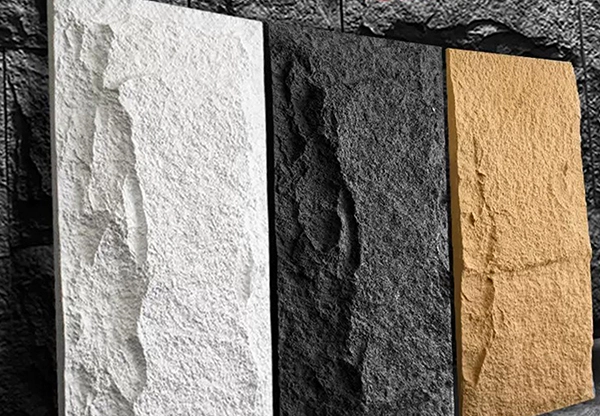
The first step in selecting PU stone wall panels is confirming the exact appearance required for the project. Unlike traditional stone materials, PU stone panels are manufactured decorative products, meaning the texture, color, mold design, and surface treatment must be controlled during production to achieve a consistent visual result.
For commercial projects, appearance consistency is especially important because large wall areas make small differences more noticeable. A hotel exterior, villa facade, restaurant feature wall, or retail display area may contain dozens or hundreds of panels installed together. If different batches have obvious differences in color, texture depth, or stone pattern, the final appearance may not meet the original design expectation.
Before ordering, buyers should confirm:
| Specification | Details to Confirm |
|---|---|
| Stone Style | Brick, slate, rock, stone block, or custom design |
| Surface Texture | Rough, natural, aged, or modern finish |
| Color | Approved color sample |
| Pattern | Random or repeated pattern |
| Surface Treatment | Coating and protection method |
A physical sample should always be approved before mass production. Digital images cannot fully represent surface depth, shadow effect, texture feeling, and color under different lighting conditions.
For large commercial projects, it is also recommended to create a mock-up area before full installation. This allows designers and contractors to evaluate how the PU stone wall panels match with surrounding materials such as glass, metal, wood, lighting, flooring, and landscaping elements.
Panel dimensions directly influence installation efficiency, material calculation, transportation cost, and project schedule.
Before placing a bulk order, buyers should confirm:
Panel length and width
Thickness
Weight per panel
Weight per square meter
Dimensional tolerance
Edge design
Installation overlap or joint method
Although PU stone wall panels are lightweight compared with natural stone, dimensional consistency is still important. Panels with unstable sizes may create alignment problems during installation, especially on large walls where repeated patterns and joint lines become visible.
Thickness should also match the application.
For decorative interior walls, lighter panels may provide easier installation and lower transportation costs. For exterior applications or areas exposed to stronger environmental conditions, buyers may require stronger structures, additional protection, or specific installation methods.
A common mistake in bulk purchasing is selecting the cheapest panel without checking the actual structure. Two products with the same appearance may have differences in density, backing design, surface coating, and durability.
The RFQ should therefore include the complete technical requirement instead of only requesting:
“PU stone panels, 1200 square meters.”
A better specification includes:
“PU stone wall panels for commercial exterior decoration, required size, thickness, approved texture sample, installation method, and project environment.”
This provides suppliers with enough information to recommend the correct product.
PU stone wall panels are widely used because polyurethane materials provide lightweight characteristics, design flexibility, and easier handling compared with traditional stone. However, the correct product selection still depends on where the panels will be installed.
Before ordering, buyers should clearly define:
Indoor or outdoor application
Climate conditions
Humidity exposure
Temperature changes
Cleaning requirements
Impact risk
Expected service life
For example, a hotel lobby feature wall and an outdoor commercial facade may require different considerations.
Interior applications often focus on:
Appearance
Installation speed
Weight
Decorative coordination
Exterior applications may require more attention to:
Weather resistance
UV exposure
Moisture protection
Fixing method
Long-term durability
The supplier should understand the actual environment before recommending the product.
Buyers should also confirm whether additional documentation is required, including:
Fire performance information
Environmental documents
Technical data sheets
Installation guidelines
Commercial projects frequently require material approval before installation. Preparing these documents early can prevent delays after delivery.
One of the main advantages of PU stone wall panels is installation efficiency. Compared with traditional stone materials, lightweight panels can reduce handling difficulty and simplify construction.
However, installation quality still depends on correct preparation.
Before ordering, confirm:
Recommended fixing method
Required adhesive
Mechanical fastening requirements
Wall preparation
Joint treatment
Corner solutions
Cutting method
Different project conditions require different installation approaches.
A new concrete wall, existing brick wall, drywall structure, and metal frame system may require different preparation methods. If the supplier understands the substrate in advance, they can provide more suitable installation recommendations.
For large commercial projects, installation planning is especially important because labor efficiency directly affects project cost.
A complete installation plan should consider:
Panel layout
Starting point
Cutting position
Corner handling
Waste control
Worker training
A high-quality panel can still produce poor results if installers do not understand the correct fixing method.
For this reason, bulk buyers should request installation instructions before ordering instead of waiting until the panels arrive at the construction site.
Fire performance is an important consideration when selecting decorative wall materials for commercial buildings.
Hotels, restaurants, offices, shopping spaces, and public buildings may have strict requirements regarding decorative materials. Buyers should confirm the required standards before placing an order.
The RFQ should include:
Project location
Applicable fire standard
Required classification
Documentation requirements
Approval process
Buyers should avoid relying only on general statements such as “fire resistant” because actual performance depends on the specific product structure, thickness, surface treatment, and installation system.
A supplier should provide documentation related to the exact product being quoted.
This helps architects, contractors, and project consultants evaluate whether the material meets the project requirements.
Fire requirements should be confirmed at the beginning of supplier communication. Changing materials after production has started can create significant delays and additional costs.
For international projects, buyers should also confirm whether the available documents are accepted in the destination market.
For bulk PU stone wall panel orders, production consistency is one of the most important factors.
Large projects usually require repeated installation across multiple rooms, floors, buildings, or areas. The supplier must maintain consistency in:
Color
Texture
Size
Surface finish
Panel structure
Before mass production, buyers should approve a reference sample and define quality standards.
The inspection standard may include:
| Inspection Item | Requirement |
|---|---|
| Appearance | Match approved sample |
| Color | Consistent between batches |
| Dimensions | Within tolerance |
| Surface | No visible defects |
| Edges | No damage |
| Packaging | Suitable for transportation |
Packaging is also critical because PU stone panels contain decorative surfaces that can be damaged during transportation.
Confirm:
Protective packaging
Carton or pallet method
Moisture protection
Corner protection
Loading method
Shipping conditions
For export projects, poor packaging can create problems even when the production quality is acceptable.
Lead time should also include:
Sample approval
Production
Quality inspection
Packaging
Shipping preparation
For large projects, discuss whether shipments can be delivered in phases according to the construction schedule.
Bulk PU stone wall panel projects often require customization.
Customization may include:
Special colors
New textures
Custom sizes
Project-specific patterns
Matching accessories
Packaging requirements
Before choosing a supplier, buyers should evaluate whether the company can support customized production rather than only supplying standard products.
A reliable supplier should provide:
Product samples
Technical communication
Production capability
Quality control process
Delivery planning
After-sales support
Long-term supply capability is also important for commercial projects.
Hotels, villas, and commercial buildings may require replacement panels after several years due to renovation, accidental damage, or expansion. Working with a supplier that can maintain product records makes future replacement easier.
The lowest quotation is not always the lowest project cost. A supplier with stronger quality control and technical support may reduce overall expenses by preventing installation problems and replacement issues.
Shandong Demax Group provides decorative wall panel solutions for different architectural applications and supports customized project requirements based on design, performance, and installation needs.
| RFQ Item | Information Required |
|---|---|
| Project Type | Hotel / Villa / Commercial Building |
| Application | Interior / Exterior Wall |
| Stone Style | Texture and Color |
| Panel Size | Standard or Custom |
| Thickness | Required Specification |
| Quantity | Square Meter / Pieces |
| Installation | Fixing Method |
| Environment | Climate and Exposure |
| Fire Requirement | Required Standard |
| Sample | Approval Requirement |
| Packaging | Export Requirement |
| Delivery | Project Schedule |
A complete RFQ allows suppliers to provide more accurate pricing and technical recommendations.
It also helps buyers compare quotations based on the same requirements instead of choosing only by price.
Buying PU stone wall panels in bulk requires careful evaluation of design, dimensions, material performance, installation requirements, fire documentation, quality consistency, packaging, and supplier capability.
For commercial projects, the right product is not simply the panel with the lowest price. It is the solution that provides stable appearance, reliable performance, efficient installation, and long-term project value.
Shandong Demax Group provides decorative wall panel solutions for commercial and residential applications, helping buyers select suitable materials according to project requirements.
By preparing a detailed specification before ordering, buyers can reduce communication errors, avoid unexpected costs, and achieve more consistent installation results.
A: Confirm the panel design, texture, dimensions, thickness, material performance, installation method, fire requirements, packaging, delivery schedule, and supplier capability.
A: Yes. PU stone wall panels are commonly used for hotels, villas, restaurants, retail spaces, offices, and architectural decoration projects.
A: Many suppliers can customize colors, textures, sizes, and project-specific designs depending on production capability and order requirements.
A: Approve physical samples, define inspection standards, control production batches, and confirm packaging requirements before mass production.
A: Installation depends on the wall condition, panel design, and project requirements. Buyers should confirm fixing methods and accessories before ordering.
A: Some PU stone panels can be used outdoors, but buyers should confirm weather resistance, UV exposure, moisture conditions, and installation requirements with the supplier.
A: Samples help confirm actual color, texture, surface quality, and installation appearance before large-scale production.
A: Compare product quality, customization ability, technical support, production consistency, packaging, delivery reliability, and after-sales service rather than price alone.


