


English
Views: 0 Author: Site Editor Publish Time: 2026-08-24 Origin: Site


B2B procurement managers and construction contractors constantly face supplier quality issues. Print misalignment remains a leading cause of production failures. Poor registration in decorative panels ruins final aesthetics. It also drives up defect rates and disrupts critical project timelines. Millimeter-level shifts quickly make an entire batch unusable. You need reliable interior materials to meet strict client standards. Defective panels damage brand reputations and hurt profit margins. How do top manufacturers prevent these costly errors? They rely on advanced industrial processes rather than manual guesswork. We will demystify the technology required to maintain strict print registration. You will learn how automated web guiding, tension control, and thermal management work together. This evidence-based framework helps you evaluate supplier quality control systems accurately. It gives you the confidence to shortlist only the most capable manufacturing partners. You can secure consistent materials for every high-stakes commercial project.
Millimeter-level deviations quickly destroy product value. A PVC Heat Transfer Marble Sheet requires exact alignment between the substrate and the printed film. Even minor shifting causes blurred veins or distorted stone patterns. Clients reject these materials immediately upon inspection. Distributors then face unsellable inventory sitting dead in their warehouses.
Inconsistency creates massive hidden costs. Distributors spend extra capital sorting acceptable panels from defective ones. Material waste piles up at the factory level. These delays inevitably push back construction schedules. Contractors lose trust in your brand when they receive mismatched panels. A damaged reputation often takes years to rebuild.
You need clear success criteria when evaluating production methods. The primary goal is maintaining sub-millimeter registration tolerances. Suppliers must sustain this accuracy across thousands of continuous linear meters. True enterprise-level production demands unwavering consistency from the first meter to the last.
We must acknowledge a skeptical reality check. Absolute zero-defect production is a myth in heavy manufacturing. Environmental variables always introduce slight variations. Your goal is not finding a mythical flawless factory. Instead, you must identify suppliers actively running robust variance control systems. They measure, track, and correct deviations before the naked eye can detect them.
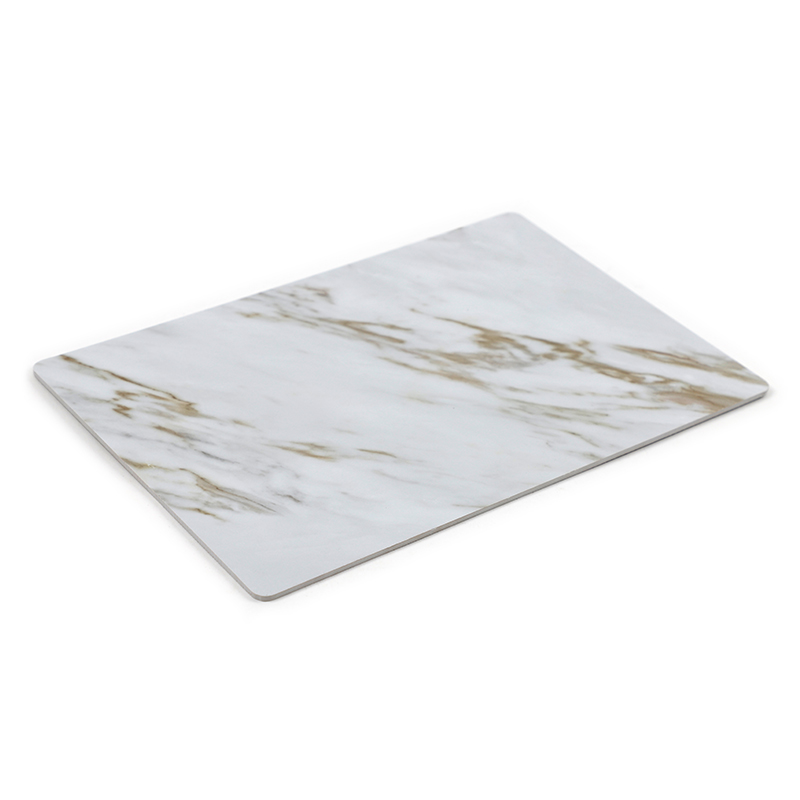
Low-tech alignment methods fail under commercial pressure. Operators often use manual registration pins or visually line up transparent films. These manual techniques cannot match high-speed production requirements. Human fatigue inevitably introduces catastrophic alignment errors. Modern factories leave manual adjustments behind.
Top suppliers deploy integrated industrial hardware to solve these physical challenges. We can break down these core technologies into three crucial systems:
These systems eliminate human error entirely. They analyze position data thousands of times per minute. Motors shift rollers by fractions of a millimeter based on this continuous feed. You get highly accurate panel designs because the machine self-corrects instantly.
Three-dimensional surfaces introduce complex alignment hurdles. A standard flat print relies purely on a two-dimensional grid. However, a 3D PVC marble wall panel features distinct tactile grooves. Factories must align a 2D printed pattern perfectly inside physical 3D embossed indentations. A misaligned vein crossing a physical groove looks instantly artificial.
This challenge is highly visible in a textured rock slate marble sheet. The visual stone grain must match the deep slate embossing. If the print drifts just one millimeter, the tactile illusion breaks. Clients demand hyper-realistic textures. Therefore, suppliers must solve this geometry problem continuously during extrusion.
Hardware synchronization provides the answer. Premium suppliers mechanically link the embossing roller and the printing cylinder. They utilize heavy-duty servo motors to lock the rotation speeds together. The digital controller ensures every rotation matches perfectly. This gearless synchronization guarantees veins align seamlessly with tactile indentations.
Buyers must adjust their evaluation dimensions for textured materials. Standard flat-print Quality Assurance (QA) reports do not measure tactile alignment. You must explicitly request "emboss-in-register" (EIR) QA reports. These documents verify how well the factory synchronized the visual print and the physical texture. Always demand EIR reporting when sourcing premium 3D cladding.
Thermal expansion presents a massive implementation risk. A heat transfer PVC marble sheet relies on high temperatures to bond inks to the core substrate. However, intense heat causes PVC plastics to expand and warp rapidly. Uncontrolled expansion destroys print registration instantly. The material shifts, causing severe pattern blurring.
Factories implement strict thermal stability controls to combat this. Top-tier facilities utilize graduated pre-heating zones. These zones slowly bring the PVC up to temperature. Gradual heating prevents sudden material shock. Once the pattern transfers, precision chilling rollers immediately shock the material cold. This rapid cooling locks the physical dimensions and freezes the design exactly in place.
Different finishes require specialized application variants. Consider a golden film PVC marble sheet. Metallic foils behave differently than standard pigmented inks under heat. Foils can crack or shift if the roller temperature spikes. Suppliers must adapt their tension and temperature controls specifically for metallic overlays. They map out custom heat profiles to ensure perfect bonding without foil distortion.
You should inspect a factory's cooling infrastructure. Large chilling units indicate a serious commitment to dimensional stability. Without proper chilling, ambient factory heat keeps the material malleable for too long. Extended malleability invites late-stage registration drift right before the cutting process.
Choosing the right supplier demands rigorous technical screening. You cannot rely on marketing brochures. You must ask specific engineering questions to verify their capabilities. Thorough due diligence separates reliable partners from amateur operations.
Use this due diligence checklist when touring factories or interviewing sales engineers:
Tolerance documentation provides concrete proof of consistency. Ask the factory for Process Capability (Cpk) reports. These reports analyze historical alignment consistency across multiple production runs. A higher Cpk score indicates a highly stable process. Do not accept verbal assurances regarding accuracy.
Table: Process Capability Index (Cpk) Interpretation for Registration Accuracy
| Cpk Score | Industry Meaning | Registration Consistency Level |
|---|---|---|
| Below 1.00 | Unacceptable | High variation. Visible misalignment expected in every batch. |
| 1.00 - 1.33 | Marginal | Acceptable for budget materials. Requires manual sorting. |
| 1.33 - 1.67 | Industry Standard | Good control. Sub-millimeter accuracy maintained consistently. |
| Above 1.67 | World Class | Exceptional control. Near-zero visible registration defects. |
Material specifics alter the evaluation process slightly. Evaluating a rigid waterproof PVC ceiling panel differs from evaluating flexible films. Rigid panels require robust mechanical feed alignment. Flexible sheets rely more heavily on dynamic tension control. Ensure the supplier uses the correct guidance machinery for the specific substrate rigidity.
Your next-step actions dictate future success. Always request "first article inspection" (FAI) samples before authorizing full production. You must examine these physical samples under bright lighting. Finally, set firm contractual limits on acceptable registration drift per batch in your Service Level Agreement. Clear boundaries protect your capital.
Reliable print registration remains a complex engineering challenge. You cannot solve it through operator skill alone. True consistency requires sophisticated automation. High-speed sensors, tension rollers, and closed-loop data feeds form the backbone of modern quality control. They guarantee precise alignment across massive production runs.
Suppliers who invest heavily in optical web guiding stand apart. Those prioritizing aggressive thermal stabilization are the only viable partners for enterprise-level procurement. They eliminate guesswork and deliver uniform panels every single time. Their engineering investments protect your brand reputation.
Take action today to secure better materials. Download a comprehensive supplier audit checklist for your procurement team. You can also contact a specialized engineering team for a deeper consultation. Define your acceptable material tolerances clearly before signing the next major contract.
A: Typically ±0.5mm to ±1mm depending on the complexity of the design and whether it requires emboss-in-register matching. Tighter tolerances increase production costs but ensure premium visual quality for luxury applications.
A: No. Once the heat transfer or lamination is complete, the process is irreversible. Misaligned sheets must be scrapped or recycled, highlighting the need for real-time monitoring.
A: Double-sided registration requires dual-camera alignment systems to ensure opacity layers match exactly, introducing higher risks of deviation compared to standard single-sided PVC panels. The web tension must remain perfectly balanced on both axes.
A: Usually caused by inconsistent ambient factory temperatures affecting material stretch, or a lack of closed-loop tension control on the supplier's production line. Worn-out mechanical rollers also contribute to gradual drift.


