


English
Views: 0 Author: Site Editor Publish Time: 2026-08-23 Origin: Site


Batch-to-batch color variation remains a severe commercial risk in large-scale architectural design. When wall cladding shifts in hue midway through a hotel lobby installation, the result is complete aesthetic failure. Client disputes escalate rapidly, and costly tear-outs inevitably follow. Natural wood veneers are notoriously unpredictable materials. Tree age, local climate, and uneven stain absorption constantly alter their final appearance. Today, architects demand engineered predictability over organic volatility. You need reliable materials to maintain strict design standards across massive surface areas.
This article explores how a commercial-grade WPC Wood Veneer Wall Panel achieves high-fidelity, repeatable grain patterns. We will examine how these advanced composite systems deliver perfect color continuity without the volatile nature of traditional timber. By replacing biological variables with digital manufacturing precision, developers can guarantee flawless aesthetic execution across any multi-phase construction project.
Natural materials fail spectacularly during multi-phase architectural projects. You cannot simply order oak veneer six months apart and expect a flawless match. Biological variables make strict consistency impossible. Tannin levels fluctuate wildly from tree to tree. Sapwood absorbs liquid stains much differently than dense heartwood. Even localized warehouse humidity changes how wood pores accept pigments during the final finishing process. These organic limitations compound rapidly as project scope increases.
Specifying natural wood introduces immense business risks. The primary impact is expectation management failure. Clients often approve a small, perfectly stained golden-oak sample. They later reject the final wall installation because the larger panels appear dark and heavily grained. Contractors then face severe material sorting labor costs. Workers spend hours attempting to match disparate boards visually on the job site. This manual sorting process drastically inflates project timelines and frustrates installation teams.
Furthermore, waste percentages skyrocket when you rely on organic timber. Installers routinely discard up to 30% of natural wood shipments due to unacceptable color drift. You pay for material you simply cannot use. Engineered composites completely bypass this scaling problem. They offer mathematical predictability where nature only offers random variation.
Material Consistency Comparison
| Variable Factor | Natural Wood Veneer | Engineered WPC Panel |
|---|---|---|
| Pigment Absorption | Highly unpredictable based on wood grain density. | Zero absorption; utilizes digital film lamination. |
| Multi-Phase Matching | Nearly impossible without custom stain blending. | Exact matching via digital file retention. |
| Environmental Reaction | Fades or darkens heavily under UV and moisture. | High UV resistance locks in original color. |
| On-Site Waste Factor | High (15% to 30%) due to visual rejection. | Extremely low (under 5%) due to uniform output. |
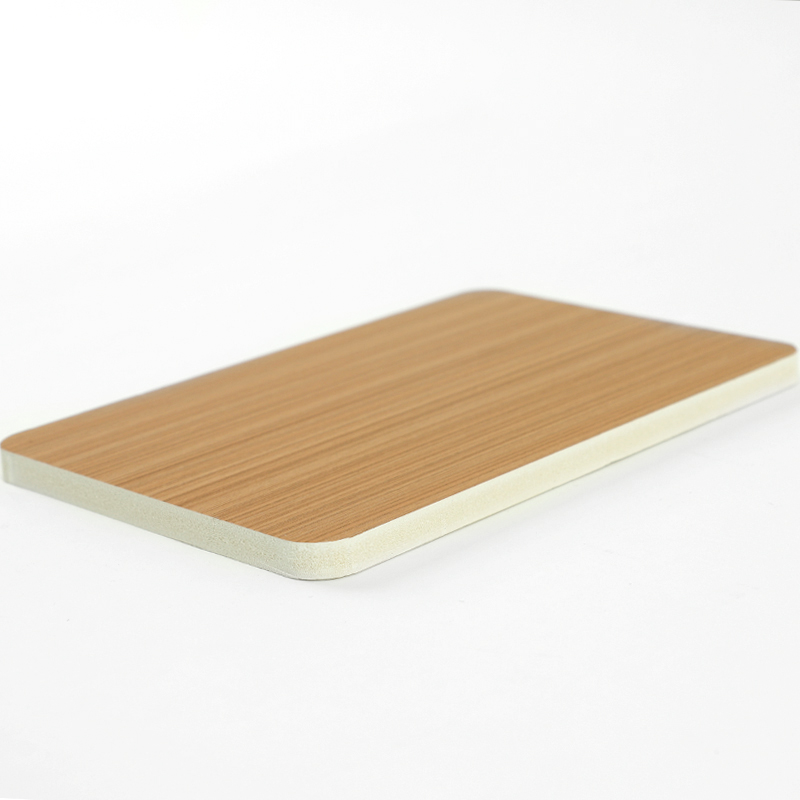
Modern composite panels eliminate guesswork from the design equation. Quality consistency relies entirely on strict, automated manufacturing controls. Industry-leading factories monitor every stage of production to ensure your final product matches your exact specifications.
The base material dictates overall surface stability. Manufacturers mix wood powder and PVC using exact algorithmic ratios. This rigorous standardization prevents substrate bleed-through. A dark, inconsistent core can easily ruin a light oak surface film. Factories monitor pigment loads continuously via automated weighing systems. Specialty variations, like a WPC bamboo charcoal wall panel, utilize specific high-density dark cores. For these specialized panels, the core mix remains equally uniform to ensure the overlying decorative film appears crisp and vibrant.
Organic millwork relies on liquid stains. Composites rely on advanced digital printing technology. A premium WPC surface plate utilizes high-definition PVC or PET decorative films. Printers generate these thin films from highly controlled digital master files. This process completely eliminates organic pigment drift. Every pixel of the wood grain remains identical across thousands of meters of production. You get high-fidelity visual depth without the unpredictable nature of biological timber.
Fusing the decorative film to the rigid core requires absolute precision. Automated lamination lines maintain constant heat and pressure levels. If application rollers become too hot, the decorative film stretches. Stretching distorts the wood grain geometry permanently. It also thins the ink layer, which drastically reduces perceived color depth. Calibrated infrared sensors prevent these micro-distortions entirely. They ensure the film binds flawlessly without altering the printed aesthetic.
The final protective layer locks in the aesthetic. Automated UV curing systems apply a specialized top-coat across the boards. This process establishes a universal gloss or matte tolerance level across the entire production run. Gloss levels heavily influence color perception. A highly glossy panel looks substantially darker than a matte panel, even if the underlying printed color matches exactly. Consistent UV application ensures the entire batch reflects ambient room light uniformly.
Modern architectural projects rarely feature simple, flat walls. Dynamic spaces demand complex shapes, curved corners, and slatted room dividers. Keeping wood grain colors identical across multiple architectural shapes poses a massive challenge. Natural wood requires custom manual staining for different millwork profiles. This manual process inevitably leads to noticeable visual variations across a room.
Advanced composite manufacturing offers an elegant, engineered solution. Reputable factories utilize the exact same decorative film master roll across totally different extruded profiles. This shared-film strategy ensures absolute cross-profile matching. The digital wood grain on your flat wall is literally printed from the same digital file as your complex trim pieces. Everything ties together perfectly.
Consider a large corporate lobby design. You might specify wide flat panels for the primary feature walls. Above the seating area, you transition into a suspended WPC ceiling panel system to hide exposed ductwork. To divide the reception desk from the waiting lounge, you install a vertical WPC square tube partition. By sourcing these three distinct structural profiles from the same manufacturer, the surface films match flawlessly. You achieve a cohesive, designer-grade aesthetic without spending countless hours on custom stain-matching.
Perfect factory controls do not automatically guarantee perfect walls. Site-level installation discipline dictates the final visual outcome. Job site realities frequently cause perceived color mismatches. Installers must adopt strict handling protocols to protect the original design intent.
Smart commercial contractors utilize a dry lay process before applying any structural adhesives. This procedure involves unboxing and staging panels from multiple cartons simultaneously. Following this protocol eliminates concentrated visual repetition.
This commercial standard prevents awkward blocks of identical grain repeats. It creates a much more natural, flowing aesthetic across large spans.
Orientation errors ruin color consistency instantly. Many inexperienced installers fail to check the grain direction arrows printed on the panel back. If you flip one panel upside down, it looks like a severe color mismatch. The physical ink color remains identical, but ambient light refracts differently off the inverted wood grain texture. This microscopic refraction creates a false illusion of a lighter or darker board. Always align the boards uniformly according to the manufacturer's directional markings.
Color perception changes drastically under different light sources. Industry professionals call this phenomenon metamerism. A wall panel might look warm and rich under natural afternoon daylight. That exact same panel might look dull and ashy under cool fluorescent office lighting. Warm LED bulbs amplify red and yellow undertones, while daylight bulbs highlight blue and grey tones. Installers should always evaluate their dry lay staging under the final intended lighting conditions. Never approve a layout using temporary, harsh construction halogens.
You cannot achieve long-term design consistency without a reliable manufacturing partner. Commercial buyers must aggressively vet their suppliers before ordering materials. Ask hard questions about internal quality control metrics before signing any purchase order. Proper vetting prevents catastrophic delays later.
Industry professionals measure color differences using the Delta-E (ΔE) scale. A low Delta-E score means the human eye cannot perceive a color shift. You must ask what percentage of Delta-E color deviation the manufacturer permits. Reputable factories reject any batch exceeding a strict ΔE limit. Request this tolerance documentation up front. If a supplier cannot provide these exact mathematical metrics, they rely on visual guessing.
Multi-phase developments often span several years. You might need identical wall cladding for a Phase Two expansion later. You must verify if the factory retains physical master samples of your initial order. Quality manufacturers keep archived cuts in a dark, climate-controlled storage room. They use these retained physical samples to calibrate their spectrophotometers for your future production runs. This rigorous policy guarantees your next order matches your first order flawlessly.
Procurement teams must practice smart risk mitigation. Calculate your waste factors accurately before the project begins. Order your attic stock during the initial purchase phase. Ensure the supplier fulfills the entire project requirement from a single, continuous extrusion run. This specific strategy completely bypasses the risks associated with multi-batch production scheduling. It is always safer to over-order slightly on day one than to attempt a desperate color match two years down the line.
The commercial design industry has shifted decisively. Architects and developers no longer accept the severe risks associated with natural wood variation. Engineered reliability represents the new standard for large-scale interiors. By leveraging advanced digital film printing and strict resin formulations, composite panels deliver flawless visual continuity. You can design vast spaces without fearing sudden color shifts or mismatched grain patterns.
True consistency requires a dual approach. You need factory-level digital controls combined closely with site-level installation discipline. Proper panel staging, correct grain orientation, and lighting awareness matter just as much as strict manufacturing tolerances. Both elements must work together.
Take proactive steps on your next commercial project. Request technical data sheets and Delta-E tolerance specifications from your vendors early. Ask your supplier for physical cross-profile sample kits. Evaluating these engineered materials thoroughly beforehand ensures your final installation matches your original vision perfectly.
A: Micro-fading and standard manufacturing tolerances make perfect retroactive matching extremely difficult. Manufacturers calibrate machines precisely, but atmospheric shifts and slight resin batch variations cause imperceptible changes. We strongly advise ordering a 5-10% attic stock during your initial production run. This strategy guarantees a perfect match for future repairs or minor expansions.
A: High-quality decorative surface films remain completely opaque. The underlying core typically does not alter the primary surface color. However, a highly contrasting core can sometimes affect the edge-seam appearance. If installers do not trim or wrap edges properly, a dark core might show through the joints and disrupt the visual flow.
A: This illusion usually stems from light refraction angles. Check the grain direction arrows printed on the back of each panel. Inverting one board changes how light hits the grain texture, creating a false color mismatch. Additionally, verify wall flatness. Bowed walls alter light reflection angles, making flush panels appear darker or lighter.


