


English
Views: 0 Author: Site Editor Publish Time: 2026-08-19 Origin: Site


Dimensional tolerance is an important quality factor in WPC Wall Panels. A wall panel may look acceptable from the surface, but if its length, width, thickness, groove fit or profile shape is not controlled, installation problems can appear quickly. Panels may not align well, joints may look uneven, decorative lines may shift, or workers may need extra trimming during installation.
Before approving WPC Wall Panel samples or bulk orders, buyers should confirm how the manufacturer checks length, width, thickness, groove fit, profile accuracy and batch consistency.
For project orders, dimensional tolerance affects both appearance and installation efficiency. A small size difference may not be obvious in one panel, but it can become visible across a full wall, hotel corridor, office lobby, retail store or residential feature wall. This is why WPC wall panel dimensional tolerance should be checked before packaging and shipment.
This article explains how dimensional tolerance is checked in WPC Wall Panels and what buyers should confirm before placing custom or bulk orders.
Dimensional tolerance in WPC Wall Panels is checked by measuring critical size and fit items before shipment.
Key points include:
Panel length affects alignment and cutting requirement.
Panel width affects coverage and joint spacing.
Panel thickness affects wall level and accessory fit.
Groove and tongue accuracy affects interlocking fit.
Profile depth affects decorative texture consistency.
Edge straightness affects visible joint lines.
Flatness affects the final wall appearance.
Warpage affects bonding, fixing and installation contact.
Batch consistency matters for project orders.
Final inspection should be completed before packaging approval.
The acceptable tolerance should be confirmed according to product profile, size, installation method and project requirement.
A typical control process can be shown as:
Design Size → Production Setup → Cutting Control → Dimensional Measurement → Sample Assembly → Batch Record → Packaging Approval
WPC Wall Panels are often used for decorative wall cladding, interior feature walls, commercial spaces, residential projects and hotel decoration. In these applications, the panel surface is visible, and installation quality directly affects the final appearance.
Dimensional tolerance matters because it can influence:
installation speed;
panel-to-panel joint alignment;
groove and tongue fit;
visible line consistency;
wall surface neatness;
accessory compatibility;
cutting waste;
project installation cost;
customer acceptance after installation.
If panel length varies too much, installers may need extra cutting. If panel width is inconsistent, coverage calculation becomes less accurate. If panel thickness changes, the wall surface may not look even. If groove accuracy is poor, the panel may not connect tightly.
For a small sample, these issues may be easy to miss. For a large project order, they can create repeated installation delays or visible defects.
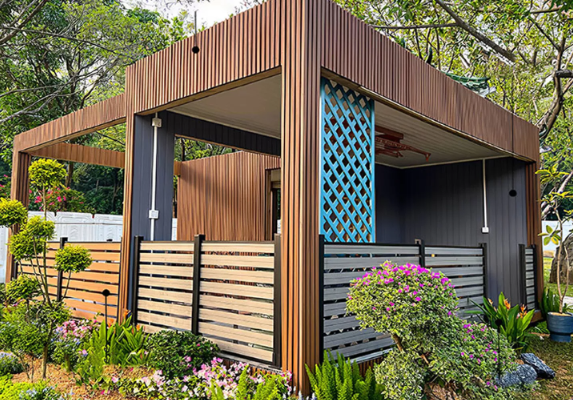
A WPC wall panel inspection should cover more than simple length and width. Wall panels often have grooves, ribs, edges, decorative profiles or interlocking structures. These areas must be checked because they affect installation fit and visual continuity.
| Inspection Item | What It Confirms |
|---|---|
| Length | Whether panels align during installation |
| Width | Whether coverage and joint spacing remain consistent |
| Thickness | Whether panels sit evenly on the wall |
| Groove width | Whether interlocking fit works correctly |
| Tongue size | Whether joint tightness is stable |
| Profile depth | Whether decorative texture is consistent |
| Edge straightness | Whether visible joint lines stay neat |
| Flatness | Whether panel surface looks smooth after installation |
| Warpage | Whether panels bond or fix properly |
| Batch label | Whether mixed batches can be avoided |
The inspection scope should match the panel design. Flat panels, fluted panels, grooved panels and custom profiles may require different measurement points.
Length, width and thickness are the basic dimensions in WPC wall panel dimensional tolerance checking. These values confirm whether each panel matches the order specification and can be installed as planned.
Panel length is usually checked to confirm whether cutting control is stable. If panel length varies within the same batch, installers may need extra trimming. For large-area installation, inconsistent length can slow down the project.
Panel width affects wall coverage and joint spacing. If width variation is not controlled, the total coverage may not match the calculated quantity. It can also affect panel-to-panel alignment.
Panel thickness affects wall level, accessory compatibility and fixing stability. If panel thickness is inconsistent, some panels may sit higher or lower than others after installation.
Basic size inspection usually includes:
checking several positions along the panel;
comparing measured values with the approved specification;
recording deviations when required;
separating abnormal panels before packaging;
confirming batch consistency before shipment.
For custom WPC Wall Panel size orders, buyers should confirm target length, width, thickness and acceptable tolerance before production.
Groove, tongue and profile accuracy are critical for WPC Wall Panels with interlocking, fluted or decorative structures. These areas determine how well panels connect and how consistent the final wall surface looks.
A groove that is too narrow may make installation difficult. A groove that is too loose may create unstable joints. A tongue that is too thick may not fit properly, while a tongue that is too thin may reduce joint tightness.
Profile accuracy may include:
groove width;
groove depth;
tongue thickness;
tongue height;
rib spacing;
profile height;
decorative line spacing;
edge shape;
corner shape;
panel-to-panel fit.
For decorative profiles such as WPC Fluted Wall Panel products, dimensional tolerance should include rib spacing, groove depth, profile height and panel-to-panel visual alignment.
This part of inspection is especially important because profile inconsistency can be visible after installation. Even if length and width are correct, poor profile accuracy can make decorative lines look uneven.
Straightness, flatness and warpage affect installation quality and visual appearance. A panel may meet length and width requirements but still create problems if it bends, twists or does not sit flat against the wall.
Straightness inspection checks whether the edge of the panel stays aligned. Poor edge straightness can create visible joint gaps or uneven lines.
Flatness inspection checks whether the panel surface remains even. If a panel is not flat, it may not bond well or may create uneven wall appearance.
Warpage inspection checks whether the panel has bending or twisting after production, cooling, storage or packaging. Warped panels may be harder to install and may not sit properly on the wall.
Common signs of poor straightness or warpage include:
visible edge gaps;
uneven joints;
panel lifting;
unstable bonding;
poor contact with wall surface;
decorative line distortion;
installation difficulty.
Inspection should be completed after the panel has cooled and stabilized. Measuring too early may not reflect the final product condition.
Dimensional tolerance is directly connected to installation quality. When panels are consistent, installers can work faster and achieve better joint alignment. When dimensions vary, installers may need extra cutting, adjustment or rework.
Poor tolerance control may cause:
visible gaps between panels;
uneven joint lines;
loose interlocking fit;
tight or difficult assembly;
misaligned decorative grooves;
inconsistent wall coverage;
extra trimming on site;
project delay;
higher installation cost;
customer complaints after installation.
For large commercial projects, consistency is especially important. A small panel variation can become more visible when hundreds or thousands of panels are installed together.
This is why WPC wall panel quality control should include both size measurement and sample assembly checks.
WPC wall panel dimensional inspection usually uses practical measurement tools. The exact tools depend on panel type, tolerance requirement and order specification.
| Inspection Tool | Typical Use |
|---|---|
| Tape measure | General length and width check |
| Vernier caliper | Thickness, groove and tongue measurement |
| Thickness gauge | Panel thickness consistency |
| Straightedge | Edge straightness and warpage review |
| Flatness table | Surface flatness check |
| Go/no-go gauge | Groove or locking fit confirmation |
| Visual inspection | Surface, edge and profile appearance |
| Sample assembly check | Panel-to-panel joint fit |
A sample assembly check is useful because it shows whether panels fit together in a real installation condition. Measurement data is important, but actual panel-to-panel fit can reveal problems that simple dimension checks may miss.
For strict project requirements, buyers may request a clearer inspection plan before bulk production.
For bulk WPC Wall Panel orders, manufacturers usually do not check every single measurement on every panel in the same way. Instead, they may use a combination of first article inspection, in-process checks, batch sampling and final inspection.
A practical inspection process may include:
checking the first panel after production setup;
confirming cutting length and profile shape;
checking panel thickness during production;
reviewing groove and tongue fit;
sampling panels from the batch;
checking flatness and warpage after cooling;
confirming color, model and batch label;
performing sample assembly;
approving packaging after final inspection.
Batch sampling helps confirm whether the production process remains stable. Final inspection helps confirm whether panels are ready for shipment.
For repeat orders, batch records can also help compare size consistency between previous and current production.
Buyers should confirm dimensional requirements before production, especially for custom sizes or project orders. Different profiles, installation methods and site requirements may need different tolerance priorities.
| Buyer Question | Why It Matters |
|---|---|
| What is the target panel size? | Defines production and inspection standard |
| Is the panel flat, fluted or grooved? | Affects measurement points |
| Is it for indoor or outdoor use? | Affects profile and performance expectations |
| What installation method is used? | Affects groove and edge fit requirements |
| Are accessories required? | Affects thickness and joint compatibility |
| Is this a repeat order? | Requires batch consistency review |
| Is custom packaging needed? | Protects panels during shipment |
| Is a pre-shipment inspection needed? | Supports project order approval |
For custom WPC Wall Panel sizes, Demax Decor can help confirm length, width, thickness, groove fit, profile accuracy, sampling method and final inspection requirements before bulk production.
Demax Decor supports WPC Wall Panel supply for interior decoration, commercial wall projects, residential feature walls and custom design requirements. For buyers who care about size accuracy and installation fit, quality discussion should start before production.
Demax Decor can help review:
target panel size;
panel profile;
interior or exterior use;
color requirement;
groove or interlocking structure;
installation method;
accessory compatibility;
project quantity;
packaging requirement;
sample approval process;
tolerance request;
final inspection needs.
For project orders, this information helps align production, inspection and packaging. It also helps reduce misunderstandings about size, profile and installation expectations.
Dimensional tolerance in WPC Wall Panels is checked by measuring length, width, thickness, groove fit, tongue size, profile depth, straightness, flatness, warpage and batch consistency. These checks help ensure smoother installation, tighter joints, better visual alignment and more reliable bulk order quality.
The inspection scope should match the product profile and project requirement. Flat panels, fluted panels, grooved panels and custom WPC Wall Panel sizes may need different measurement points. For large orders, batch sampling, sample assembly and final inspection are useful for confirming installation fit before shipment.
Send Demax Decor your panel profile, required length, width, thickness, installation method, project quantity, color requirement and tolerance request to discuss a suitable WPC Wall Panel solution.
Dimensional tolerance refers to the acceptable variation in panel length, width, thickness, groove fit, profile shape, straightness, flatness and other size-related features.
It affects installation fit, joint alignment, decorative line consistency, wall appearance, cutting waste and project installation efficiency.
Common inspection items include panel length, width, thickness, groove width, tongue size, profile depth, edge straightness, flatness and warpage.
Panel thickness can be checked with calipers or thickness gauges at multiple points to confirm consistency across the panel and batch.
Groove and tongue accuracy affects interlocking fit, joint tightness and installation stability. Poor fit can cause loose joints or difficult assembly.
Flatness can be reviewed with a straightedge, flatness table or visual inspection to confirm whether the panel sits evenly and avoids visible distortion.
Warpage means bending or twisting of the panel. It can affect bonding, fixing, wall contact and final installation appearance.
No. The acceptable tolerance should be confirmed according to panel profile, size, installation method, application and buyer requirement.
Batch consistency helps ensure that panels installed across a large wall or multiple areas have stable size, profile and joint alignment.
Yes. Demax Decor can review panel profile, target size, installation method, project quantity and tolerance request before custom or bulk production.


