


English


When designing functional spaces, selecting the right surface material changes everything. You need an option combining visual impact, structural flexibility, and uncompromising safety. A mosaic tile is an architectural surface material comprising small, individually cut pieces. Manufacturers pre-assemble these chips — usually 4x4 inches or smaller — onto a mesh backing for efficient layout.
While historically viewed as purely decorative, modern project selection demands more. You must evaluate physical performance carefully before making a final decision. Specifically, you need to consider moisture resistance, slip friction, and substrate compatibility. These factors dictate how a surface performs over decades of daily use.
In this comprehensive guide, we provide an evidence-based breakdown of material types. We will explore functional advantages over standard large-format options. You will also discover the realities of complex installations. Finally, we establish strict long-term maintenance criteria to protect your architectural investment.
Sizing Standard: True mosaics are defined by individual chip sizes no larger than 4x4 inches, heavily altering the grout-to-tile surface ratio.
Structural Versatility: Mesh-backed mosaic sheets are highly suitable for wrapping curved architectural features such as columns, benches, shower niches, pool basins, and rounded corners.
Safety First: The high density of grout lines acts as a natural friction grid, making mosaics a practical choice for sloped shower floors and wet areas.
Material Comes First: Glass, porcelain, ceramic, natural stone, and metal each have different porosity, durability, and maintenance requirements.
Processing Is Separate From Material: Waterjet cutting is a manufacturing process used to create complex shapes and patterns. It should not be compared directly with material categories such as glass, porcelain, or natural stone.
Implementation Risk: Despite simplified layout due to mesh backing, mosaics are susceptible to surface unevenness, requiring strict leveling protocols, suitable mortar, and careful sheet alignment.
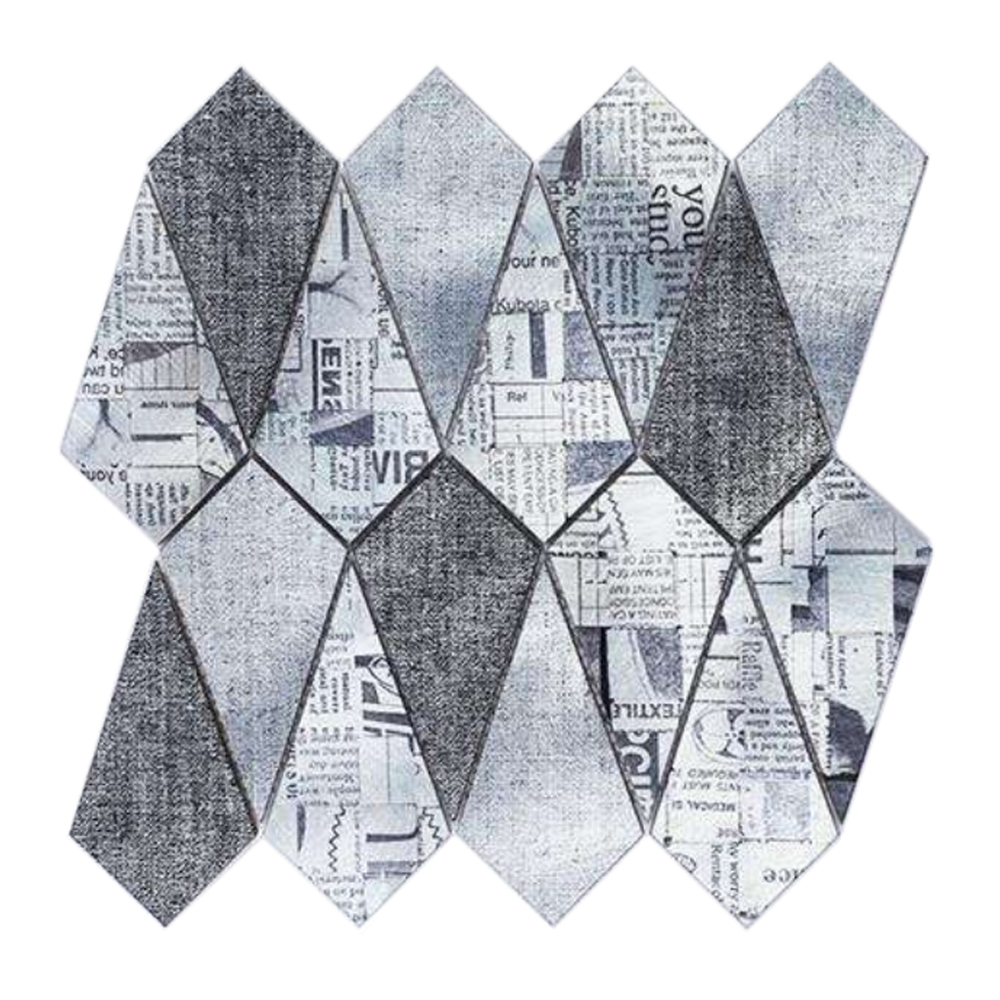
We must match the right material to its intended environment. Not all mosaic chips perform equally under stress, heavy moisture, or frequent foot traffic. Material selection should focus on porosity, water absorption, surface hardness, slip resistance, and maintenance requirements. Decorative processing methods, such as waterjet cutting, can influence pattern complexity and visual effect, but the base material still determines long-term performance.
Glass chips offer a non-porous, highly reflective surface. They are completely resistant to chemical degradation and moisture intrusion. Many modern brands utilize recycled materials to create eco-friendly designs. Glass reflects light beautifully, making small spaces feel significantly larger.
Evaluation note: When tiling with glass mosaic tile, specific white thin-set mortar is strictly required. Standard gray mortar will show through the translucent pieces. Gray mortar ruins the visual depth and leaves ugly trowel marks visible. Glass remains ideal for kitchen backsplashes and fully submerged pool environments.
These clay-based options provide a cost-effective and highly durable solution. Ceramic works wonderfully for decorative wall applications. Porcelain, however, offers superior density. It features a much lower water absorption rate (often below 0.5%). This dense structure makes porcelain suitable for high-traffic zones. It also excels in freeze/thaw outdoor applications where standard ceramic would crack.
Natural stone delivers organic texture. It brings a timeless, luxurious aesthetic to any room. Each chip features unique veining and color variations. However, natural stone demands greater care. You must implement strict sealing protocols. Natural porosity allows water, oils, and cosmetics to penetrate the surface. Without proper sealants, stone chips will stain permanently.
Material Comparison Chart
Material Type | Porosity Level | Ideal Environment | Maintenance Requirement |
|---|---|---|---|
Glass | Non-porous | Pool basins, wet walls, backsplashes | Low (Easy to wipe clean, no sealing) |
Porcelain | Extremely Low (<0.5%) | High-traffic floors, outdoor spaces | Low (Highly stain and scratch resistant) |
Natural Stone | High (Varies by stone) | Accent walls, dry floors, luxury bathrooms | High (Requires routine penetrating sealers) |
Standard large-format products struggle in complex architectural environments. They demand perfectly flat surfaces and square corners. Small chips provide distinct physical benefits you cannot ignore. The Mosaic Tile format solves several complicated construction problems at once.
Standard tiles fail on non-linear planes. You cannot bend a rigid 12x24-inch slab. Mosaic’s flexible mesh backing effortlessly wraps around curves. This adaptability grants designers immense creative freedom.
Consider the structural challenges of a luxury bathroom. You can seamlessly cover steam room benches, custom shower curbs, and un-squared architectural transitions. Placed on a flexible mesh, the tiny chips contour perfectly to undulating shapes. This eliminates sharp edges and dangerous corners.
The defining physical trait of this installation type is the sheer volume of grout lines. This grid creates inherent slip-resistance. Wet environments pose significant liability and safety risks.
Friction Grid: The dense network of grout acts like a tread pattern. Bare feet grip these depressed lines securely, preventing slips.
Slope Conformation: Shower pans require a conical slope toward the drain. Large tiles require awkward diagonal cuts to follow this slope. Small chips easily conform to the mandatory drainage slopes without cracking.
Water Channeling: The grout channels actively help direct standing water toward the drainage system.
The modular nature of mesh-mounted small chips drastically reduces the need for complex field cutting. Installers face countless obstacles on a job site. They must navigate around plumbing fixtures, floor drains, and tight vanity corners.
With large slabs, installers spend hours at the wet saw. They must measure and cut precise holes. With mesh-backed sheets, installers simply cut the mesh with a utility knife. They remove a few individual chips to accommodate pipes. This accelerates the layout phase significantly.
Even experienced professionals face challenges during layout. Proper technique separates a flawless finish from a costly failure. Small chips conform to the substrate exactly. This means they highlight underlying imperfections rather than hiding them.
The most common failure in this type of installation is an undulating, uneven surface. Installers call this a "wave formation." It occurs when parts of the mesh sink deeper into the mortar than others. You cannot fix this once the mortar cures.
Installation mandate: Installers must use a flat wooden beating block. They pair this with a rubber mallet to press the entire mesh sheet into the thin-set evenly.
Apply the modified thin-set with a V-notch trowel.
Knock down the trowel ridges lightly to prevent mortar from squeezing between the chips.
Place the mesh sheet gently onto the wet mortar.
Lay the wooden beating block across multiple chips at once.
Tap the block gently with a mallet to ensure all chips sit flush on a single horizontal plane.
Never press the sheets in by hand. Fingers apply uneven point pressure, causing individual chips to sink and dry crooked.
Adhesive choice dictates the lifespan of the project. Mastic should never be used for wet or outdoor areas. Mastic is an organic adhesive. It re-emulsifies when exposed to consistent moisture. If you use mastic in a shower, the chips will literally fall off the wall.
Modified thin-set mortar is required. The polymer modifiers in the thin-set ensure a rigid, moisture-resistant bond. For translucent glass applications, always specify bright white thin-set.
Patience proves critical during the curing phase. Thin-set must be allowed a strict 24-hour minimum cure time before grouting. If you grout too early, you trap moisture beneath the glass or stone. This trapped moisture causes discoloration and mold growth.
For high-moisture or commercial applications, grout selection matters immensely. Epoxy grout or polymer-enhanced grout is highly recommended over standard cement-based grout. Epoxy grout provides maximum stain resistance. It never requires sealing. It also delivers superior structural stability, holding the tiny chips firmly in place against impact.
Understanding the premium pricing helps you protect your investment appropriately. Longevity depends heavily on proper post-installation care. Ignorance regarding chemical interactions will destroy high-end materials quickly.
These products typically carry a higher per-square-foot cost than standard tile. This price difference surprises many buyers. The premium is driven entirely by labor-intensive manufacturing processes.
Factories do not simply stamp out single large pieces. Manufacturing requires complex sorting of tiny components. It demands precise alignment within specialized molds. Finally, it involves manual or machine-assisted gluing to the mesh backing. Intricate waterjet patterns require even more machine time and hand assembly. You pay for this intense craftsmanship.
The longevity of a small-chip installation is heavily dependent on the grout and the stone's surface integrity.
Maintenance warning: Acidic cleaners must be strictly avoided. Products containing vinegar, bleach, or citrus will irreversibly etch natural stone chips. Etching destroys the polish, leaving dull, white spots. Furthermore, harsh acids will discolor or chemically degrade cement-based grout lines. Degraded grout turns powdery and washes away over time.
You must implement a pH-neutral cleaning regimen. Follow these best practices to maintain a pristine surface:
Dry Removal First: Sweep or vacuum with soft bristles prior to mopping. This removes loose grit. Grit acts like sandpaper under a mop, causing abrasive scratching on glass and high-polish stone variants.
pH-Neutral Solutions: Use only mild, pH-neutral stone or tile cleaners. Dilute them properly in warm water.
Avoid Furniture Dragging: Never drag heavy objects or furniture across these floors. Always lift heavy items to prevent gouging the dense grout network.
Prompt Spill Management: Wipe up acidic spills (wine, tomato juice, lemon) immediately to prevent permanent stains on unsealed natural stone.
Selecting the right architectural surface requires balancing aesthetics with hardcore physical realities. Small-chip meshes solve complex spatial problems while delivering unparalleled visual depth.
Choose material based on water exposure: Specify non-porous glass or high-density porcelain for wet environments. Reserve natural stone for dry floors or well-sealed accent walls.
Prioritize safety in wet rooms: Leverage the dense grout grid for natural slip resistance on shower slopes.
Respect the installation complexity: Mandate the use of beating blocks and premium modified thin-set to prevent structural failures and wave formations.
Protect your investment: Commit to pH-neutral cleaning protocols to preserve the grout and material finish.
Your next step is practical testing. Request material samples to test light refraction and texture in your actual project environment. Hold them against your walls to see how natural light affects the glaze or glass. Finally, consult with a technical sales representative to specify the correct grout and adhesive pairing for your specific substrate.
A: Standard tile consists of single, large-format pieces laid individually on a surface. Mosaic tile consists of multiple small chips, usually under 4 inches, pre-attached to a unified mesh sheet. This mesh-backed format allows for faster layout, easier adaptation to curved surfaces, and more dynamic visual patterns.
A: Yes. It is the optimal choice. The small size allows the material to easily conform to the conical slope pointing toward the drain. Meanwhile, the highly dense network of grout lines provides critical slip resistance for wet, bare feet.
A: The requirement depends entirely on the material type. Glass and porcelain mosaics are inherently non-porous and never require sealing. Natural stone mosaics, however, must be sealed periodically. You must also seal standard cement-based grouts to prevent moisture intrusion, mold growth, and staining.
A: You must use a high-quality, exterior-grade modified thin-set mortar. Never use mastic outdoors. If you are facing freeze/thaw weather conditions, experts strongly recommend pairing the thin-set with an epoxy grout. This combination prevents thermal expansion cracking and stops water ingress.


